Qoala
Resleased August 2024
Senior Product Designer
Background
Completing the required documents for issuing an insurance policy is one of the most time-consuming processes. Users must input a significant amount of data, particularly for the Policy Holder’s details. This presents an opportunity to streamline the process by leveraging OCR technology to automatically extract data from uploaded files such as KTP and NPWP. Implementing OCR in our agent app can significantly reduce the time users spend filling in policy holder information.
Beyond that, it also improves data accuracy for our operations team, minimizing the need for manual corrections or follow-ups with agents to obtain the correct customer data. While our dashboard currently relies on a third-party OCR API, our CTO has directed us to develop an in-house OCR solution to enhance accuracy and reduce costs
Old Design
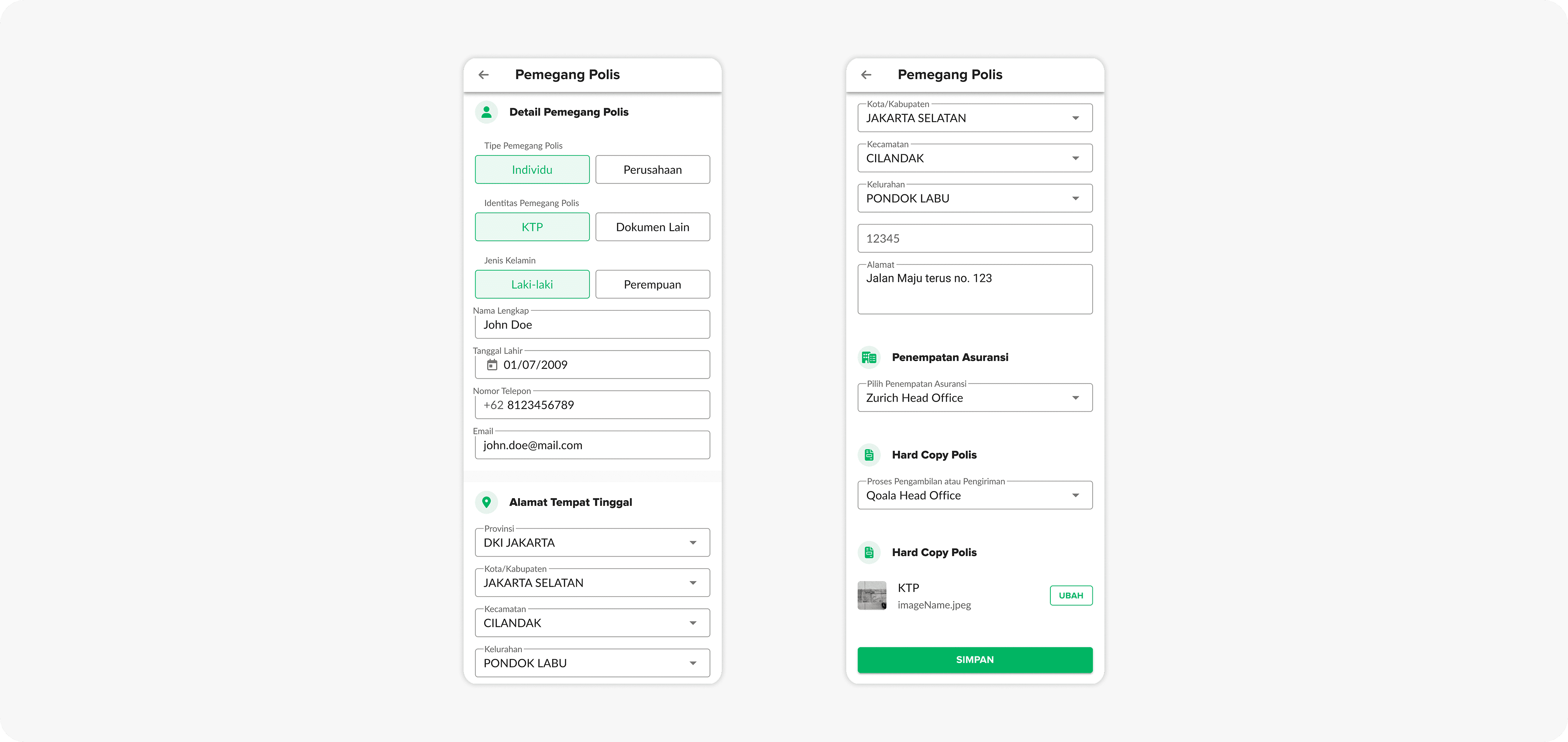
Previously, the design required users to manually fill in multiple form fields related to the policy holder, such as name, date of birth, phone number, and more. With such many amount of data to input, errors were likely to occur. Additionally, the page also required users to upload the policy holder’s KTP as a mandatory document, even though the KTP already contained the same information that users had to enter manually.
Simplified The Form
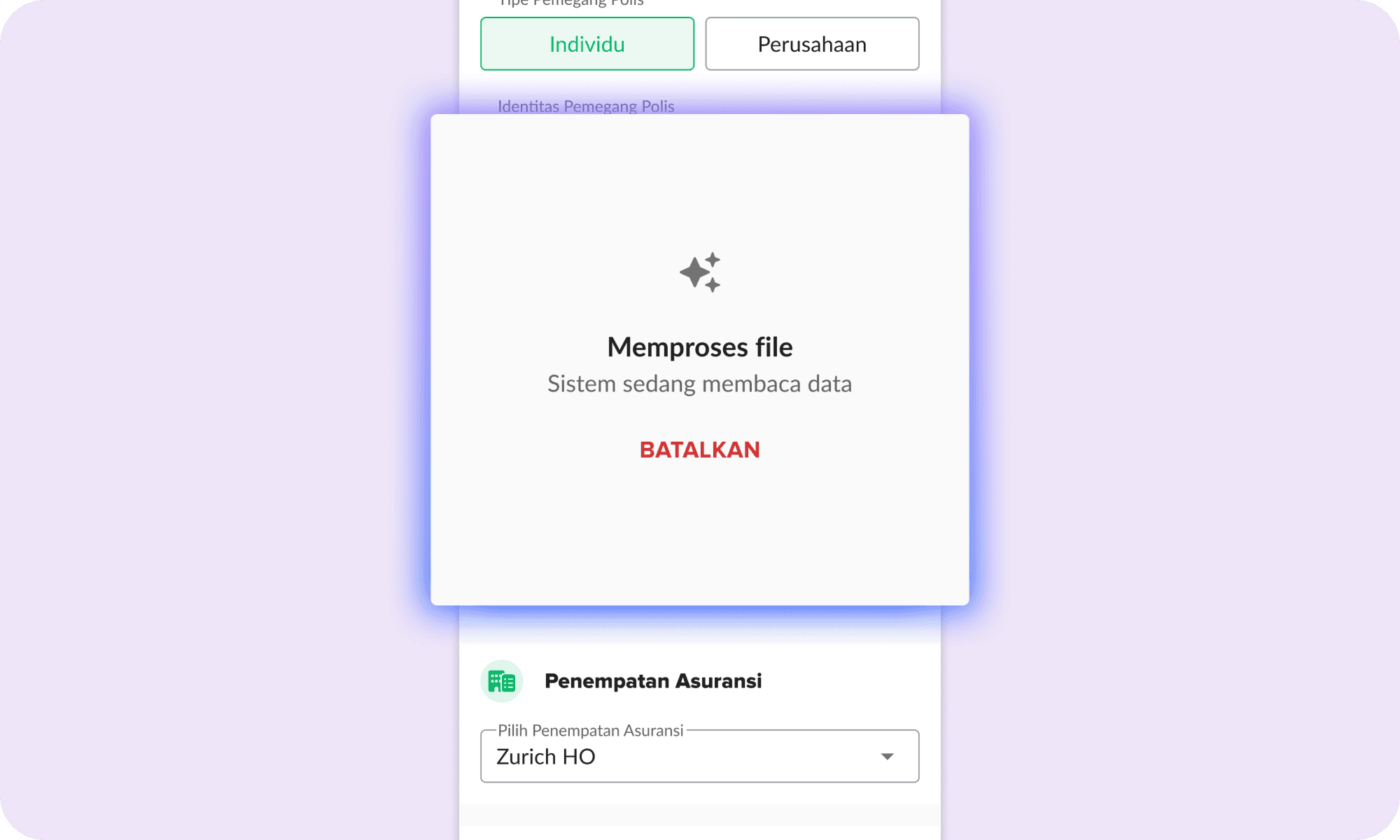
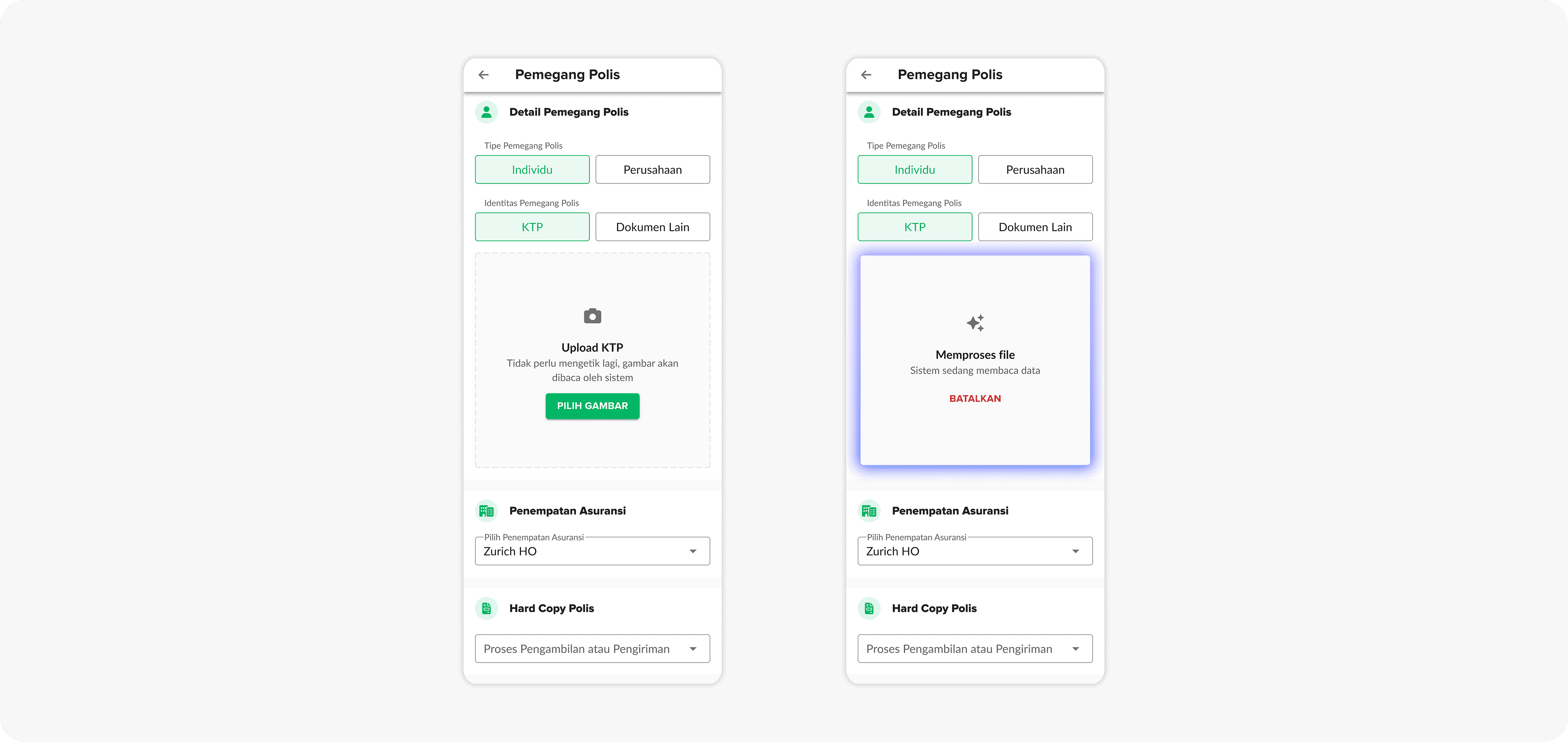
I decided to change the process of filling in policy holder data by shifting the behavior. Now, users will upload their KTP first, allowing OCR to prefill the information automatically. While OCR may occasionally misread data from damaged or unclear KTPs, users can easily review and correct any errors if needed. Additionally, I introduced a loading interaction while the OCR processes the file, ensuring users are aware that their document is being scanned and processed.
Results
After launching the project, we gathered valuable insights from the data. We successfully saved 170 hours of operational work previously spent on correcting customer data. Additionally, by utilizing our in-house OCR system, we reduced costs by nearly USD1,500.